FEATURED
YOUR EVERYDAY ESSENTIALS
ExPLORE
NON-TOXIC CLEANING 101
FEATURED
YOUR EVERYDAY ESSENTIALS
ExPLORE
NON-TOXIC CLEANING 101
Grass and mud are probably the most frequent offenders, especially in warmer months. With mud, the best move is to let it dry completely, then brush or scrape off as much as you can before it goes in the wash. Wetting mud while it's still fresh just pushes the stain deeper into the fabric. For extra precautions, treat the mud patch with a non-toxic stain spray.
For grass stains, you need something with enzymes. Bio-based enzymes break down the proteins and chlorophyll in grass, which is what makes that green so stubborn. Apply an enzyme paste or non-toxic stain stick directly to the stain, give it 5 to 10 minutes to work its magic, then rinse thoroughly before tossing in the wash. For the really ground-in stains (sliding into home plate, soccer practice, the usual), a second round of treatment before washing usually gets the job done. When in doubt, add a scoop of oxygen bleach to the load.
Fruit and berry stains look scary, but they respond well to quick action.
As soon as you can, rinse the berry or juice stain under cold running water to flush out as much pigment as possible. Then, soak the garment in hot water with a scoop or two of oxygen bleach for at least 30 minutes—but you can let it soak for up to 24 hours. The oxygen breaks down the natural dyes in the fruit, and the hot water helps it get into the fibers.
Red sauce and ketchup are similar but a bit more stubborn because of the oil content. Scrape off any excess first (resist the urge to rub), then flush with cold water from the back side of the fabric so you're pushing the stain out instead of deeper in. Pre-treat with a non-toxic stain spray or stain stick, let it sit, and wash in the warmest water the care label allows.

This is the category where the wrong move can make things permanently worse.
Rule number one with protein-based stains: cold water only. Hot water cooks the proteins and bonds them to the fabric—that's why a blood stain that’s gone through a hot wash is so much harder to deal with.
Rinse under cold running water right away. Apply a bio-based enzyme stain remover (protease enzymes specifically target protein molecules) and let it sit for 5 to 10 minutes before washing on a cold cycle. For dried protein stains, soak the garment in cold water with enzyme remover for at least 30 minutes before washing.
Heat sets protein stains permanently, so always check the stain before putting the item in the dryer.
Art supplies are all over the map, so the approach depends on what you're working with.
Water-based paint (tempera, watercolors, most finger paints) washes out pretty easily as long as you catch it while it's still wet. Rinse under warm water and wash normally with a gentle, non-toxic detergent. If it has already dried, soak it in warm water for 15 to 20 minutes to soften the paint, then work it loose with a soft brush before washing.
Permanent marker is trickier. Dab the stain with rubbing alcohol using a clean cloth and work from the outside in so you don't spread it. Blot, don't rub. Once the ink starts to lift, rinse and wash. You may need a couple of rounds.
White school glue and most craft glues are water-soluble. Soak in warm water until the glue softens, peel or rub it off, and wash as usual. For dried glue that's really locked in, a longer soak usually takes care of it.
We've all missed a stain that made it through the wash and dryer. It looks permanent, but it might not be.
Make a paste with an enzyme stain remover and a small amount of water. Apply it directly to the stain and let it sit for at least 15 to 20 minutes. Then soak the garment in hot water (for non-protein stains) or cold water (for protein stains) with a scoop of oxygen bleach for a few hours, or overnight if you can.
Wash and check before drying again. Some set-in stains take two or three rounds, but a lot of them do come out with patience.
One thing to avoid: chlorine bleach on a set-in stain. It can react with the stain and lock it in further.
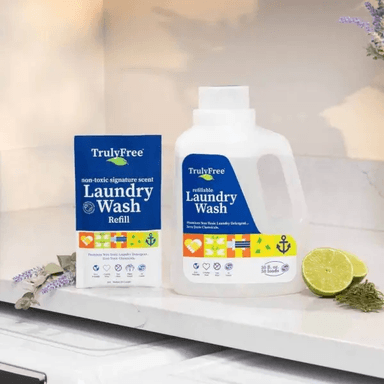
You don't need a cabinet full of specialty products for kid stains. A solid setup includes a bio-based enzyme stain remover for protein and organic stains, an oxygen bleach for soaking and brightening, a stain stick for quick spot treatment, and a non-toxic laundry detergent. That covers just about everything.
Truly Free Home makes all four, and they're all non-toxic and free of chlorine bleach and harsh fragrances. Check out our entire non-toxic laundry lineup.
Most kid stains fall into one of five categories, and the fix for each one is pretty simple once you know the approach. Cold water for proteins, oxygen bleach for fruit and dye stains, enzymes for organic material, and patience for set-in messes. Treat before you wash, check before you dry, and you'll save a lot more clothes than you lose. Happy stain removing!
In honor of America's 250th birthday, we're taking 40% off sitewide. It's our way of saying thank you, and it's only available through the holiday weekend.